High-Reliability Flight Booking Platform
Role: Lead Developer for 100+ Feature Enhancements
Duration: Jul 2022 – Jun 2024
Company: Meituan (Beijing Sankuai Online Technology Co., Ltd.)
Tech Stack: React Native, Vue.js, JavaScript, TypeScript, Node.js, REST API
Overview
Led system modernization across frontend and backend integration for a mission-critical flight booking platform serving 1M+ daily users. The platform handles flight search, booking, and payment flows across Meituan App and WeChat Mini Programs, requiring high reliability, correctness, and low latency.
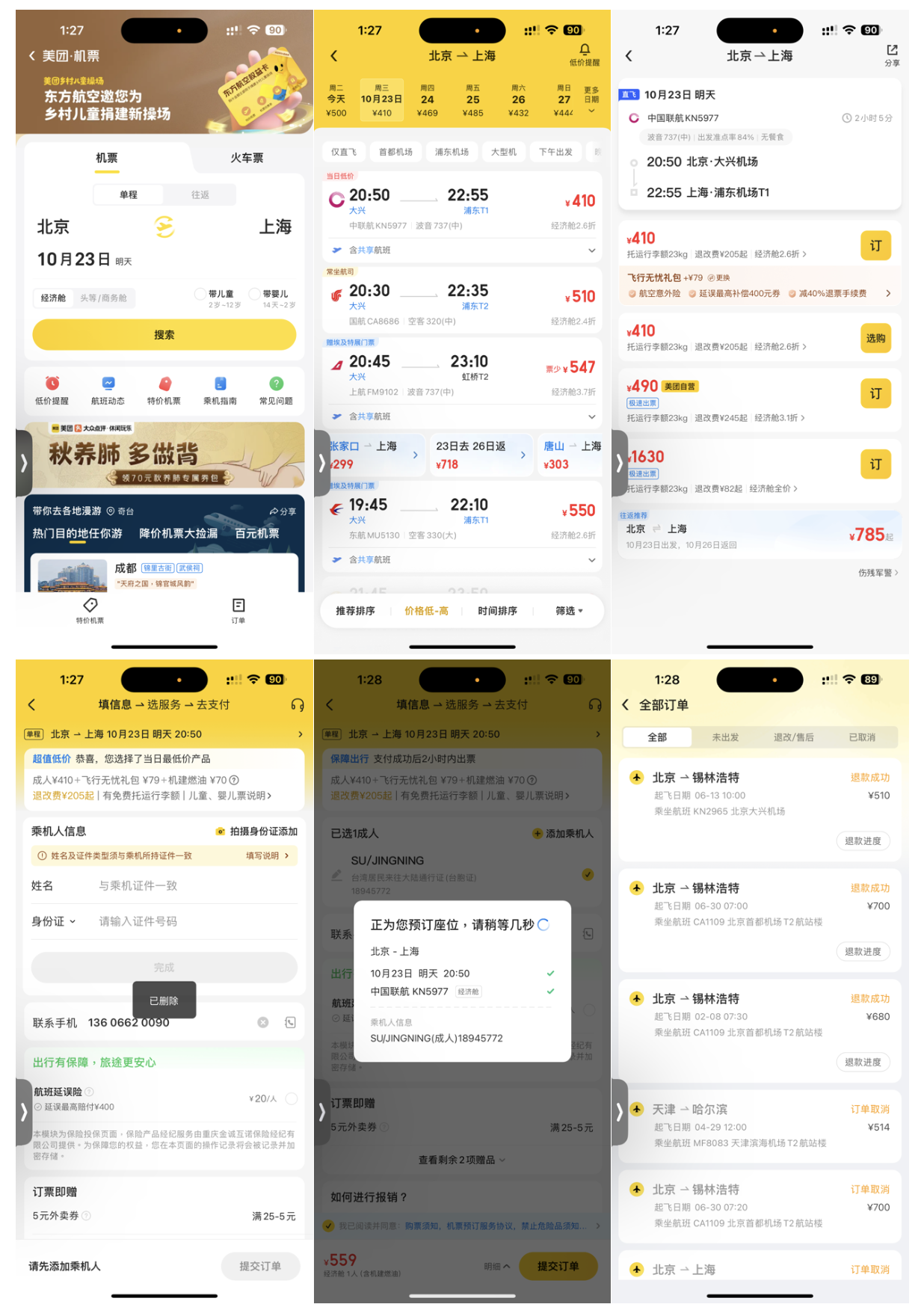
Key Achievements
Performance Optimization
- Optimized API pipelines and request strategies using lazy loading, pre-requests, and request merging
- Improved initial render speed by 16.7% through bundle size reduction, tree-shaking, and resource preloading
- Boosted booking conversion rate by 3% by reducing time-to-interactive and improving user experience
System Modernization
- Modernized legacy modules into scalable architectures with modular design patterns
- Reduced long-term maintenance cost by 30% through code refactoring and reusable component development
- Developed 20+ reusable business components (buttons, tab navigation, display cards) to reduce team workload
Cross-Platform Consistency
- Partnered with platform department to unify user experience across Meituan App and WeChat Mini Programs
- Ensured consistent behaviors and data flow across different platforms
- Implemented platform-specific optimizations while maintaining code reusability
Technical Challenges & Solutions
First Contentful Paint (FCP) Optimization
Challenge: Continuously reducing time-to-interactive for the booking flow under high traffic.
Solutions Implemented:
-
Bundle Size Reduction
- Implemented tree-shaking to eliminate unused code
- Used Babel plugin to transform
import _ from 'lodash'into efficient module imports likeimport throttle from 'lodash/throttle' - Replaced larger third-party libraries (e.g., moment.js → day.js) to minimize dependency sizes
- Used image compression tools (TinyPNG) to reduce initial resource load
-
Preloading Strategy
- Utilized PN file mechanism for dynamic resource loading with listeners
- Issued requests early and synchronized them with main bundle load
- Implemented request merging using interceptors to avoid redundant requests
-
Rendering Optimization
- Configured FlatList and VirtualizedList attributes (
initialNumToRender,maxToRenderPerBatch) to optimize initial render - Pre-calculated cell heights to improve list rendering efficiency
- Used page preloading and RAM bundle mechanism to preload next page's bundle and reuse short-lived engine instances
- Configured FlatList and VirtualizedList attributes (
Impact
- 100+ features developed and launched over two years
- 16.7% improvement in page load times
- 3% increase in booking conversion rate
- 30% reduction in future maintenance time
- 20+ reusable components reducing team development workload